By Val “The Voice” Johnson | Pure Lighthouse Media
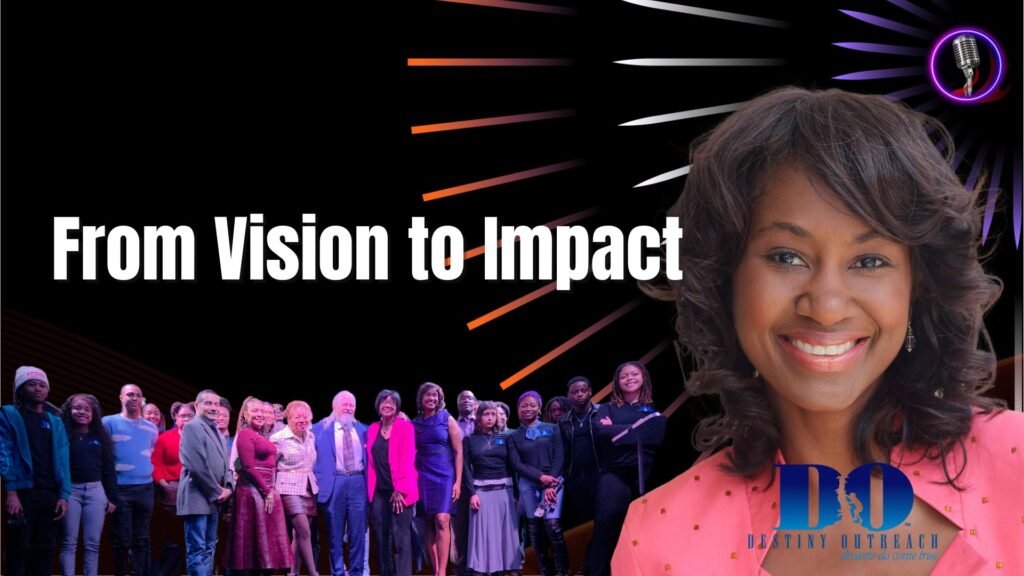
Recently, I had the opportunity to attend a press conference and graduation event for the DO! Entertainment Industry Apprenticeship Program founded by Danita E. Patterson through Destiny Outreach here in Chicago. I was excited to try remote podcasting while recording interviews with Danita and her “DO” babies. This experience was important to me not only because of the story I was covering but also because it was one of the first times I was truly treated as press representing my platforms, The Interludes Podcast and Interludes Extra Presents Talk on Tuesdays.
I was invited by publicist Veronica L. Harrison, who had previously appeared on my Talk on Tuesdays show during Black History Month. Because of that relationship, I was invited to attend the press conference and later the graduation ceremony for the apprentices. That moment meant a lot to me because it showed me something very important: podcasting can open doors into media, journalism, and storytelling spaces if you treat your platform seriously.
But this experience also taught me something else — if you are going to podcast outside of your studio, you must be prepared technically.
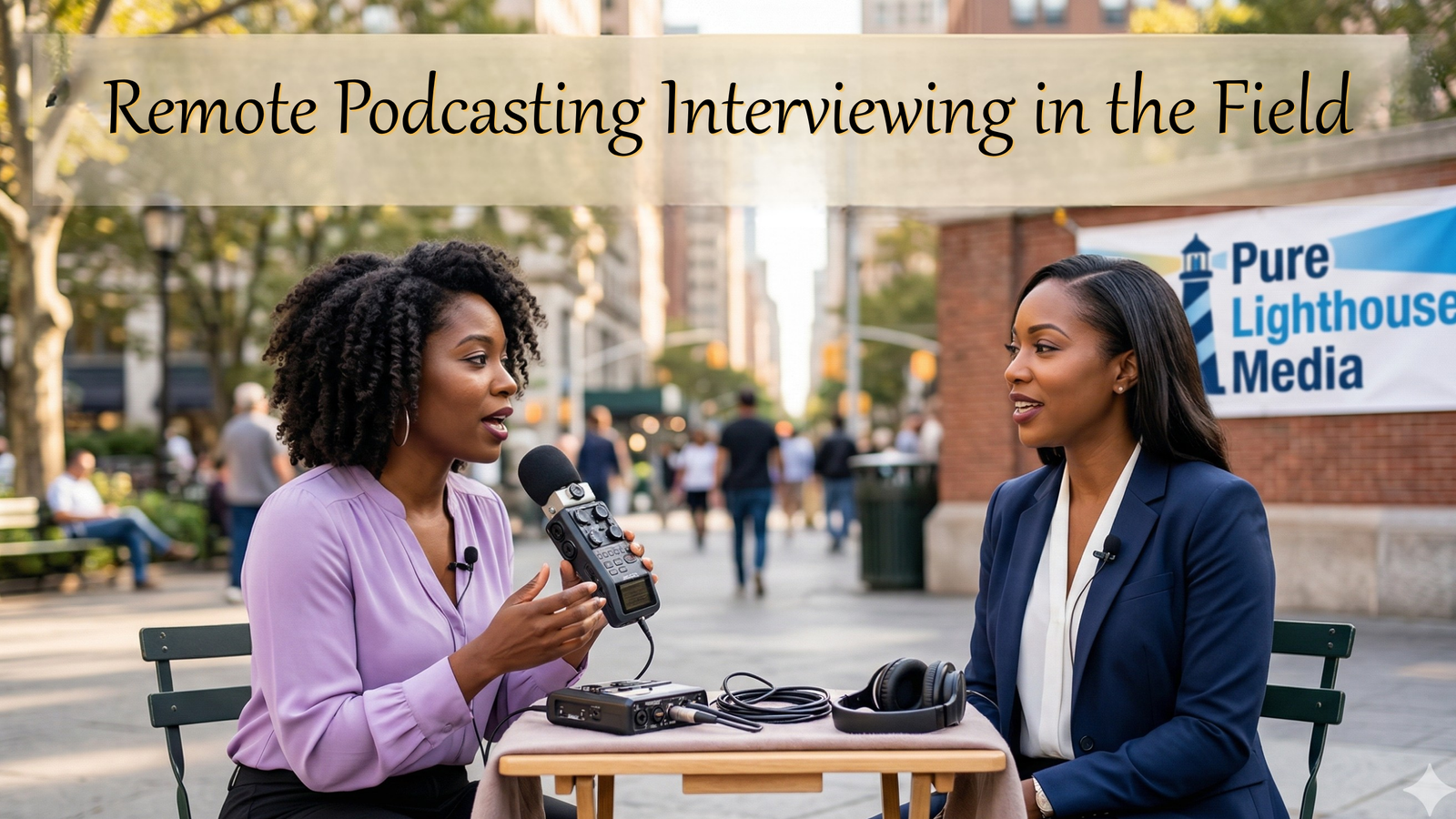
So today, I want to talk about remote podcasting, recording interviews in the field, and the gear you need so you can sound and look professional even when you’re not in your studio.
Lesson #1: Remote Podcasting is Different From Studio Podcasting
In my at-home studio, I use StreamYard, and everything is controlled. I can control the lighting, the microphone, the internet, the camera, and the graphics. But when you go out into the field—press conferences, events, interviews, conferences, red carpets, and community events—everything changes.
You are dealing with:
- Background noise
- Lighting changes
- Movement
- Multiple people
- Limited time
- No retakes
That means your audio and video setup must be simple, portable, and reliable.
One of the biggest lessons I learned during this press event was that audio matters more than anything else. People will watch slightly imperfect video, but they will not stay if the audio is bad.
Lesson #2: Good Audio is Non-Negotiable
I used an inexpensive lavalier microphone that I had purchased a while ago, and while it worked, the audio quality was not where I wanted it to be. I still released the episode because the story and the content were important, but going forward, I know that audio quality must be a priority for remote interviews.
If you are recording interviews outside your studio, I recommend looking into professional lavalier microphone systems such as the following:
These systems allow you to record two people at the same time and provide much clearer audio than inexpensive plug-in lav mics.
Lesson #3: Lightweight Cameras Make Field Recording Easier
When you are recording interviews in the field, you don’t want heavy equipment. You want something light, portable, and easy to set up quickly.
Some of the best lightweight cameras for remote podcast interviews include:
These cameras all have flip screens so you can see yourself while recording, and they allow you to plug in external microphones for better audio quality.
Lesson #4: Use a Good Tripod
A stable camera makes your production immediately look more professional. Some good tripod options include the following:
A tripod is one of the simplest ways to immediately improve your video quality.
From Vision to Impact — And What It Taught Me About Podcasting
Covering the Destiny Outreach apprenticeship program and releasing my episode “From Vision to Impact: Danita E. Patterson and the Power of Apprenticeship” reminded me that podcasting is more than recording in a studio. Podcasting can become journalism, storytelling, community reporting, and media coverage.
But if we want podcasting to open doors for us, we have to treat it professionally — and that includes learning how to record interviews outside the studio.
Remote podcasting is a skill.
Field interviews are a skill.
Media coverage is a skill.
And like everything else in podcasting, these skills can be learned.
If You Want to Start or Improve Your Podcast
If you are thinking about starting a podcast or improving the one you already have, I offer a 45-minute podcast launch and Strategy Session for $100, where we discuss the following:
- Podcast setup
- Equipment
- Recording platforms
- Distribution
- Branding
- Marketing
- Monetization ideas
You can learn more at:
www.purelighthousemedia.com
Watch to the Latest Episode
🎙️ From Vision to Impact: Danita E. Patterson and the Power of Apprenticeship
Available now at:
purelighthousemedia.com/podcast