
Launching your podcast is exciting. You’ve spent time picking your microphone, crafting your message, and finally hitting that publish button. But after the thrill of your first few episodes fades, the real question appears: how do you keep it going week after week? That’s where most podcasters start to struggle.
The truth is, success in podcasting is not just about great content or perfect sound. What truly builds loyal listeners is consistency. People come back when they know they can rely on you to show up regularly with valuable, engaging episodes.
Staying consistent doesn’t have to feel overwhelming, though. With the right plan, tools, and a bit of support, you can keep your podcast running smoothly without burning out. In this post, we’ll walk through simple, practical steps to help you stay on track after your launch; from scheduling and batching to creating a workflow that actually fits your life.
Step 1: Define Your Realistic Publishing Schedule
When it comes to podcasting, consistency matters more than how often you publish. Many new podcasters set big goals, like releasing two or three episodes a week — and quickly realize it’s not sustainable. The truth is, your listeners care more about when you show up than how often.
Think of your podcast like your favorite TV show. You tune in because you know exactly when new episodes drop. That same reliability builds trust with your audience. Whether you choose to post weekly, every two weeks, or once a month, the key is to stick with it.
If you’re just starting out, it’s better to start small and grow later. Begin with a schedule you know you can maintain comfortably. For example, releasing one high-quality episode every other week is far better than burning out after three weekly episodes.
Before you set your timeline, ask yourself:
- How much time can I realistically spend on recording and editing each week?
- Do I have help with production, or am I doing everything solo?
- What does my audience expect in terms of content frequency?
Once you find a rhythm that feels right, your audience will start to expect and look forward to your releases and that’s when your show begins to grow steadily.
Step 2: Batch Record to Save Time and Stress
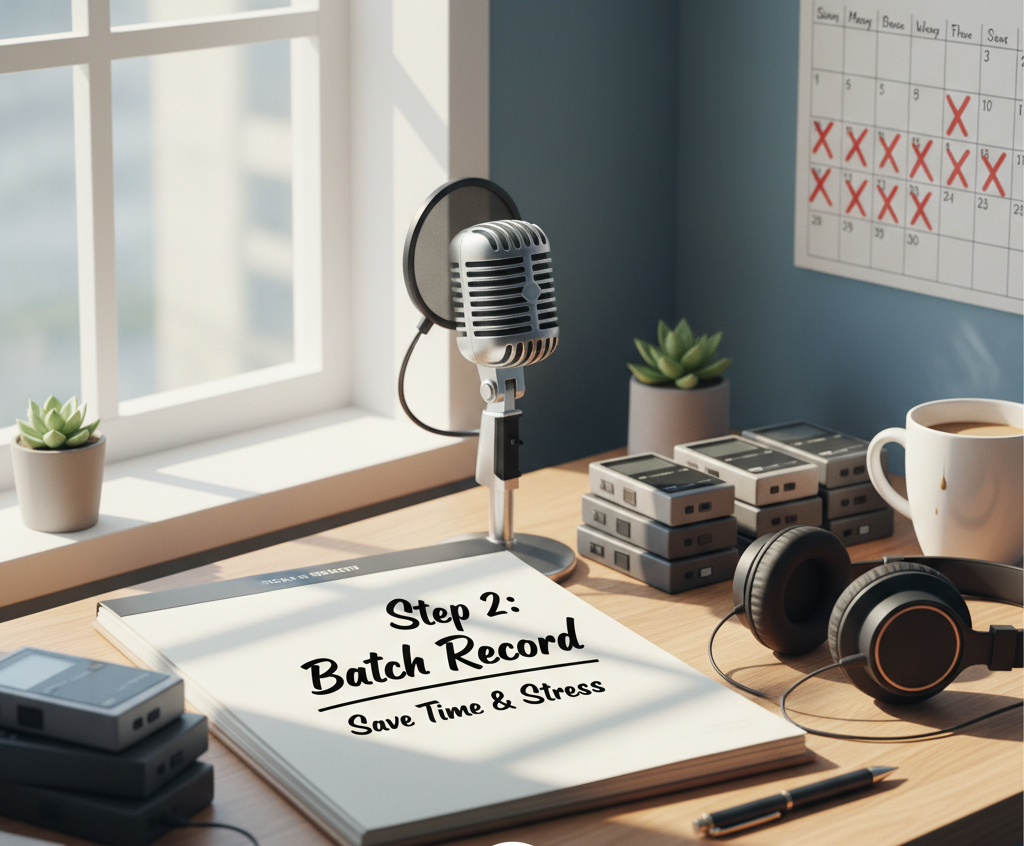
One of the biggest secrets to staying consistent as a podcaster is batch recording, creating multiple episodes in one sitting instead of recording week by week. This simple shift can completely change how you manage your time, reduce stress, and help you stay ahead of schedule.
Think of it like meal prepping, but for your podcast. When you record several episodes at once, you’re setting yourself up for smoother, more efficient weeks ahead. Instead of scrambling to record and edit the night before release day, you already have content ready to go.
Here’s a simple example: Let’s say you release one episode per week. If you record four episodes in one weekend, that’s a whole month of content prepared in advance. Now, instead of worrying about deadlines every week, you can focus on promoting your show, engaging your audience, or brainstorming fresh ideas.
Batching also improves quality. When you record multiple episodes in one sitting, your energy and tone stay consistent. You’re already in “podcast mode,” so conversations flow better, transitions feel smoother, and your content stays focused. Plus, it gives you more time to review and polish your episodes without the pressure of a last-minute upload.
To make batching work for you:
- Choose one or two dedicated recording days each month.
- Prepare outlines or scripts in advance to keep each session efficient.
- Keep snacks, water, and breaks handy, your voice will thank you.
Batch recording isn’t just a productivity trick; it’s a consistency strategy that helps you protect your creative energy while keeping your audience engaged with regular uploads.
At Pure Lighthouse Media, we provide editing services making sure you’re always ahead of schedule and never missing a release day.
Step 3: Create a Clear Production Workflow
One of the biggest reasons podcasters struggle to stay consistent is because their process isn’t organized. Every episode feels like starting from scratch — recording one day, scrambling to edit the next, then forgetting to write show notes until the last minute. The truth is, consistency becomes much easier when you have a clear production workflow in place.
A podcast workflow is simply a repeatable system that outlines every step from idea to upload. It helps you stay organized, save time, and avoid missing small but important details. Let’s break it down into four main stages:
- Recording: This is where the magic begins. Schedule your recording sessions in advance, and prepare your talking points or questions ahead of time. Check your mic levels, soundproof your space, and always record a short test clip before starting.
- Editing: Once you’ve recorded, move straight into editing, or hand it off to a professional. This stage includes cleaning up background noise, removing awkward pauses or mistakes, and adjusting sound levels. Editing can take time, so plan it into your weekly or monthly workflow.
- Show Notes and Descriptions: After your audio is ready, write your episode description and show notes. This is where you highlight key topics, quotes, or resources mentioned in the episode. Good show notes help with SEO (search engine optimization) and make it easier for listeners to find your content.
- Publishing and Promotion: Upload your final file to your podcast host, double-check your title and tags, and schedule the episode for release. Once it’s live, share it on social media, send an email update to your subscribers, and post a teaser clip to attract new listeners.
To keep everything on track, consider using project management tools like Trello, Notion, or Asana. These tools let you create checklists and track progress so you always know which stage each episode is in, from recording to promotion.
When you have a system, you don’t waste time wondering what to do next. Instead, you follow your plan, stay organized, and deliver episodes consistently.
Step 4: Delegate or Outsource Tasks
One of the biggest reasons many podcasters lose consistency after a few episodes is simple — they try to do everything themselves. From recording and editing to writing show notes, creating graphics, and promoting the show, it quickly becomes too much for one person to handle. What starts as a fun creative project can easily turn into a stressful juggling act.
The truth is, you don’t have to do it all. The most successful podcasters understand the power of delegation. When you hand off certain tasks, you free up your time and energy to focus on what you actually love, recording great conversations, planning new topics, and connecting with your audience.
Think about it this way: if editing one episode takes you five hours, that’s five hours you could have spent recording more content, improving your show’s structure, or building your community. Outsourcing isn’t an expense; it’s an investment in your time and consistency.
Here are a few smart areas to delegate or outsource:
- Editing: This is often the most time-consuming part of podcasting. A professional editor can clean your audio, balance sound levels, and remove filler words much faster and with better quality.
- Graphics and Social Media: Consistent visuals help your podcast stand out, but designing promo posts for every episode can drain your time. Hiring someone or using a creative agency ensures every post looks professional and on-brand.
- Publishing and Show Notes: Uploading episodes, writing descriptions, and tagging content might seem small, but they add up. Delegating these tasks keeps your schedule running smoothly and your uploads consistent.
- Outsourcing: This doesn’t mean giving up control, it means building support around your creative work. You can still review everything and make final decisions, but you’ll no longer feel stuck doing the technical tasks that slow you down.
Pure Lighthouse Media’s editing packages help creators save hours every week. We handle the polishing, balancing, and publishing so you can focus on creating great episodes, not fixing them.
Step 5: Plan Content Ahead of Time
One of the smartest ways to stay consistent after launching your podcast is to plan your content ahead of time. Many creators get stuck because they run out of ideas or wait until the last minute to record. When that happens, podcasting starts to feel stressful instead of enjoyable. Having a plan takes away the pressure and helps you stay creative, even when life gets busy.
Start by creating a one to two-month content calendar. This is simply a plan that outlines your upcoming episode topics, guests, and release dates. It doesn’t have to be complicated — a spreadsheet, Google Calendar, or planning tool like Notion or Trello works perfectly. The goal is to always know what’s coming next so you’re never scrambling for ideas.
Here are a few simple tips to make your content planning process easier:
- Use themes or seasons: Grouping your episodes around a topic or theme can help you stay focused and organized. For example, you could dedicate one month to “Women in Leadership” or create a mini-series on “How to Start a Business from Scratch.” This approach gives your podcast a clear direction and makes your planning feel more structured.
- Mix solo and guest episodes: Variety keeps your podcast interesting. Solo episodes let you share personal insights and connect directly with your audience, while guest interviews bring fresh voices and new perspectives. Alternating between the two can help you maintain a balanced schedule without feeling overwhelmed.
- Keep a running list of ideas: Inspiration can strike at any time, while reading, talking to someone, or even scrolling through social media. Keep a note on your phone or in a document where you jot down potential episode ideas. That way, when it’s time to plan, you already have a bank of topics to choose from.
Planning ahead also helps you stay flexible. If something unexpected comes up or a trending topic appears, you can easily adjust your schedule without missing a release. Consistency isn’t just about showing up; it’s about being prepared so you can show up confidently.
During PLM consultations, we help creators map out episode calendars that keep their content consistent, engaging, and aligned with their goals.
Step 6: Automate Where You Can
If you want to keep your podcast consistent, automation will quickly become your best friend. Many podcasters lose momentum because they try to handle every little task manually — uploading episodes, posting on social media, sending newsletters, and more. Before long, it becomes overwhelming. Automation takes that pressure off by letting technology handle repetitive tasks for you.
Start by identifying what parts of your process take the most time. Maybe it’s uploading your episodes to multiple platforms, posting updates on social media, or sending reminders to your audience when a new episode drops. Once you know those tasks, you can set up systems to do them automatically.
Here are a few ways to get started:
- Automate your uploads: Most podcast hosting platforms, like Buzzsprout, Podbean, or Anchor, allow you to schedule episodes in advance. That means you can upload several episodes at once and choose specific dates and times for them to go live. This is especially helpful if you batch record your episodes because it keeps your release schedule consistent even when you’re busy.
- Schedule your social media posts: Promoting your episodes on social media is important, but it can easily become a time drain if you do it manually each week. Tools like Buffer, Later, or Hootsuite let you schedule your posts in advance across multiple platforms. You can even plan your captions, hashtags, and visuals all at once. A simple habit to build is scheduling your episode and your social teaser at the same time. That way, everything goes out together without you having to remember it later.
- Automate your newsletters: If you send weekly or monthly podcast updates to your email list, use platforms like MailerLite, ConvertKit, or Mailchimp. These tools let you set up automatic email campaigns that go out whenever a new episode is published. This keeps your audience informed and engaged without you needing to send emails manually.
When you automate, you’re not removing the human touch, you’re freeing up time for what really matters: creating great content and connecting with your listeners. Automation also helps reduce the stress that comes with last-minute tasks and unexpected delays.
Think of it as building a podcast system that runs smoothly, even when life gets busy.
Step 7: Build a Support System
One of the biggest secrets to staying consistent after your podcast launch is realizing that you don’t have to do it alone. Even the most successful podcasters rely on a support system, people who help them stay organized, motivated, and accountable.
When you try to handle everything by yourself, burnout can sneak in fast. Editing, promoting, scheduling guests, writing show notes — it’s a lot for one person. That’s why building a strong support system is key to keeping your podcast consistent in the long run.
Start by looking at the people around you. Do you have a co-host who can share responsibilities? Maybe one of you handles guest outreach while the other focuses on editing or promotion. Splitting tasks not only saves time but also keeps the creative energy balanced.
If you don’t have a co-host, consider bringing on a virtual assistant or freelancer to handle the more repetitive work, like uploading episodes, designing graphics, or writing show notes. Even a few hours of help each week can make a big difference.
Accountability is another important part of a support system. Find someone — maybe another podcaster or a mentor — who checks in on your progress. Having someone to encourage you or remind you of deadlines helps keep your motivation high, especially on the days when you feel like skipping a week.
You can also join podcasting communities or mastermind groups. These groups are full of people who understand the same challenges you face. They share tips, celebrate milestones, and offer encouragement when things get tough. Spaces like these remind you that you’re not alone in your journey.
At the end of the day, consistency comes from structure and support. When you have people cheering you on and helping you stay organized, it becomes much easier to keep your podcast running smoothly.
Step 8: Review and Adjust Regularly
Staying consistent with your podcast doesn’t just mean posting episodes on schedule. It also means paying attention to how your show is performing and making small improvements along the way. That’s where regular reviews come in.
Think of it like a monthly checkup for your podcast. Take time to look at your analytics and ask a few key questions: Are your listener numbers growing? Which episodes are getting the most plays? Where are people dropping off? These insights help you understand what’s working and what might need a little tweaking.
For example, if you notice that listener engagement dips halfway through your episodes, it could be a sign that your intros are too long or your pacing needs adjusting. Or maybe your numbers spike every time you interview a guest — that might mean it’s time to add more guest episodes to your lineup.
Another helpful habit is reviewing your publishing schedule. If you find that weekly episodes are starting to feel overwhelming, it’s perfectly fine to switch to a biweekly schedule. Consistency doesn’t mean locking yourself into a routine that no longer fits. It means maintaining a rhythm that works for you and your audience.
It’s also smart to review your promotional efforts. Maybe you’re sharing on Instagram but noticing most of your traffic comes from LinkedIn. In that case, shifting your focus could help you reach more of the right listeners with less effort.
When you build in time for regular reflection, your podcast grows stronger and more aligned with your goals. You’re not just staying consistent, you’re staying intentional.
Conclusion
At the end of the day, consistency is what turns a good podcast into a trusted brand. It’s not just about releasing episodes on time — it’s about showing your audience that they can rely on you to deliver value, week after week. That steady rhythm builds trust, strengthens your reputation, and keeps your listeners coming back for more.
Remember, you don’t have to be perfect. Some weeks will be easier than others, and that’s completely normal. What matters most is your commitment to showing up and improving along the way. Every episode you publish is a step forward, a chance to connect with your audience, and proof that you’re serious about your message.So instead of chasing perfection, focus on progress. Plan ahead, use the tools available to you, and get help when you need it.
Need help keeping your show on track? Subscribe to Pure Lighthouse Media’s ongoing editing or production package. We’ll handle the behind-the-scenes work so you can focus on creating great content every week.