If you’re like most podcasters, you probably light up when the mic goes on. Recording feels natural, fun, and energizing. But when it comes time to edit? That’s where the excitement usually fades. Editing can take hours, sometimes even longer than recording itself. Between cutting out awkward pauses, cleaning up background noise, and balancing audio levels, the process can quickly become overwhelming. Instead of feeling accomplished after a great recording session, you’re left frustrated and drained, which can lead to burnout.
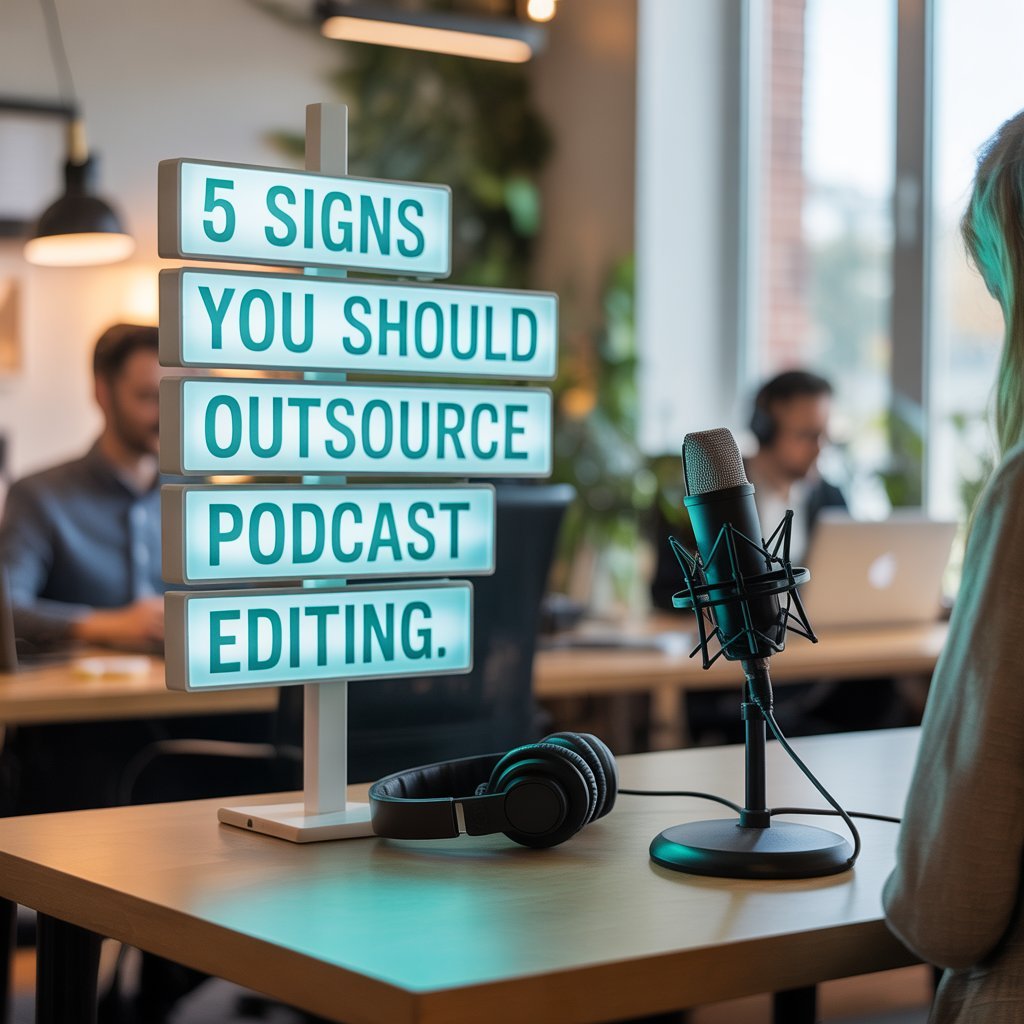
The truth is, you don’t have to carry that entire burden alone. In this post, we’re going to walk through five signs that it might be time to let someone else handle the editing for you. If any of these feel familiar, outsourcing could save you valuable time, improve your sound, and even reignite your passion for podcasting.
Sign 1: You Spend More Time Editing Than Recording
For most podcasters, hitting record is the fun part. You might spend an hour having a great conversation or sharing your insights. But then comes the editing, and suddenly that one-hour session turns into five or six hours of cutting, cleaning, and re-listening.
This imbalance is one of the biggest signs that it might be time to outsource. If editing takes up more time than recording, it slows down your production schedule. Instead of spending your energy brainstorming topics, inviting guests, or promoting your show, you are stuck trying to perfect audio levels or trim silences.
Your time is valuable, and your role as a podcaster is to create engaging content and grow your audience. Getting lost in editing software steals the focus away from those priorities. Handing off the editing allows you to reclaim that time and put it back where it matters most: creating.
Sign 2: Listeners Complain About Sound Quality
If people start telling you your podcast sounds noisy, tinny, or inconsistent, pay attention. Those complaints are not just nagging feedback. They are a clear sign that your audio is getting in the way of your message.
Common complaints you might see
- Background noise like traffic, air conditioning, or keyboard clicks that make it hard to focus on the conversation.
- Inconsistent volume where one episode or one speaker is loud and the next is whisper-quiet.
- Jarring edits or abrupt transitions that pull listeners out of the story.
- Pops, clicks, or breath sounds that distract from the content.
Why this matters
Bad sound is more than irritating. It creates listening fatigue. Your audience has to work harder to understand you, which lowers engagement. Even excellent interviews and smart ideas lose impact if listeners constantly fight background hum or sudden volume jumps. Over time this leads to fewer downloads, lower completion rates, and people choosing other shows instead of yours.
How you can spot the problem early
Check reviews, message boards, and social comments for specific phrases like I can hear the traffic or The volume keeps changing. Look at episode-level analytics. If one episode shows a big drop in listens partway through, that is often an audio problem. Ask three friends to listen on different devices, such as a phone in public, laptop with headphones, and a smart speaker, and note what they say.
Quick fixes you can try right now
Before handing off editing, run a few fast checks. Record with headphones so you hear what the mic picks up. Move away from noisy electronics and close windows. In free tools like Audacity try basic noise reduction and a gentle normalize to even out levels. These things can help, but they only go so far.
Why outsourcing helps
Professional podcast audio editing services solve the root problems, not just the surface noise. Editors use advanced tools and techniques to remove background hum without making voices sound hollow. They balance and level tracks so every episode has the same perceived loudness. They smooth transitions with proper fades, remove distracting breaths and clicks, and apply mastering that makes your show sound consistent across platforms and devices. The result is audio that feels effortless to listen to and keeps people tuned in.
What to expect from a pro editing package
A proper editing service will clean the raw files, mix multiple tracks if needed, apply EQ and compression, and set the final loudness to industry standards. They will also check the episode for glitches, export the right file types, and deliver a version ready to publish. Working with a pro can also include options like adding intro and outro music, creating chapter markers, or producing a short trailer clip.
Just so you know, if listeners are telling you that sound quality is a problem, it is not something to ignore. Outsourcing to podcast audio editing services can restore your show’s polish and protect the relationship you are building with listeners. Pure Lighthouse Media offers editing packages that handle cleanup, mixing, and mastering so you can focus on content. Book a review with us and we will show you exactly what an expert edit can do for your episodes.
Sign 3: You Feel Overwhelmed by Software Complexity
Let’s be honest. Podcast editing software can feel like learning a new language. Tools like Audacity, Adobe Audition, or Descript are powerful, but they come with menus, buttons, and features that can take weeks or even months to understand. For beginners, just figuring out how to cut out a mistake or reduce background noise can feel like climbing a mountain.
Here’s the reality: every hour you spend clicking around trying to figure out noise reduction settings or how to balance multiple tracks is an hour not spent creating content, booking guests, or growing your audience. Many podcasters start with good intentions, but the learning curve of editing software quickly turns enthusiasm into frustration.
The impact shows up in a few ways. Episodes take forever to finish because you are second-guessing every step. The sound quality changes from week to week because you are never sure if you did it “right.” Worst of all, the creative spark that made you excited to start a podcast begins to fade because editing feels like a chore instead of a fun part of the process.
The good news is, editors live and breathe this stuff. They already know which tool works best for different situations, how to remove background hiss without making voices sound robotic, and how to balance tracks so every episode sounds consistent. What takes you hours of trial and error, a professional can finish in a fraction of the time.
If you feel stuck wrestling with software instead of focusing on your podcast, that is a clear sign it might be time to outsource. Pure Lighthouse Media’s podcast audio editing services take the tech burden off your shoulders. That way, you get high-quality audio without the stress, and you can put your energy back into creating episodes you actually enjoy recording.
Sign 4: Your Episodes Are Inconsistent in Quality
Have you ever gone back and listened to your own episodes and noticed how different they sound from one another? Maybe one week your voice is clear and balanced, and the next week it feels muffled or uneven. Or perhaps you spend extra time polishing one episode, but the following one feels rushed because you were short on time.
This kind of inconsistency is more common than you think, especially for podcasters handling their own editing. Life gets busy, and editing is usually the first thing that gets squeezed. The result is that your show starts to sound like a mixed bag. Some episodes keep listeners hooked, while others quietly drive them away.
The problem with inconsistent quality is bigger than just sound. Listeners begin to notice the difference, and once they do, it affects their trust. If they never know what they are going to get from episode to episode, they may stop making your podcast part of their routine. Credibility matters in podcasting, and steady audio quality plays a huge role in building it.
This is where outsourcing can make all the difference. A professional editor is not just fixing audio issues; they are keeping your podcast consistent. They balance your levels, apply the same polish every time, and ensure your episodes sound reliable. That consistency reassures your audience and strengthens your reputation as a podcaster worth following.
With Pure Lighthouse Media’s podcast audio editing services, you do not have to worry about uneven results. Each episode will meet the same high standard, helping you build trust with your listeners and keep them coming back for more.
Sign 5: Your Podcast Growth Has Stalled
One of the most exciting parts of podcasting is watching your audience grow. But growth does not just happen by itself. It takes consistent marketing, connecting with listeners, bringing on interesting guests, and refining your content strategy. The problem is, when editing eats up all your time and energy, there is very little left for the things that actually move the needle.
Think about it. If you are spending hours every week cutting silences, adjusting volume levels, and exporting files, that is time you could be using to pitch your podcast to potential guests, share your episodes on social media, or even work on monetization opportunities. Instead, editing becomes a bottleneck, and your show starts to plateau.
This is one of the clearest signs that it is time to consider outsourcing. When you hand off editing, you free up hours in your week. That time can now be invested into activities that grow your audience and help your podcast reach more people. Growth thrives on strategy and visibility, not endless hours of tweaking audio.
By working with a professional service like Pure Lighthouse Media, you not only ensure that your episodes sound polished and consistent but also create the space to focus on what you do best: creating, connecting, and growing your show. With the editing burden lifted, you can finally give your audience growth the attention it deserves.
Conclusion
Editing is one of those hidden challenges of podcasting. It seems manageable at first, but over time it eats up your hours, tests your patience with complicated software, and can even cause your episodes to sound inconsistent. If you are spending more time tweaking audio than creating content, struggling with sound quality, or noticing your podcast growth has slowed down, it might be the right moment to let go of the editing burden.
Outsourcing does not mean losing control of your podcast. It means freeing yourself to focus on the parts you enjoy most — recording, connecting with guests, and building your audience. With professional support, your episodes will sound polished every time, your workflow will feel lighter, and you will have more energy to invest in growing your show.
Explore our editing packages today and save time while delivering professional sound.